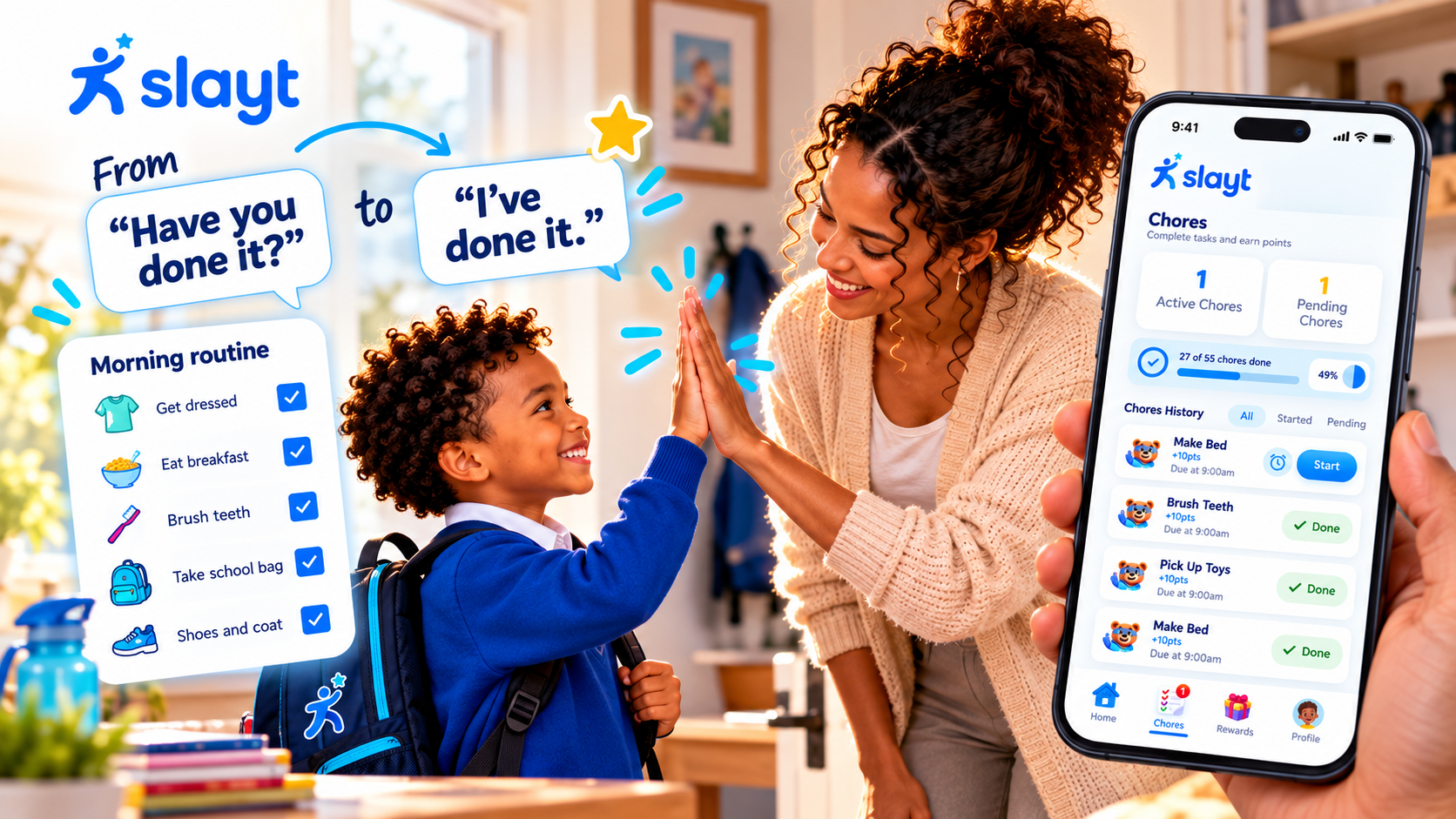
Because getting everyone to school on time should not feel like a daily race against the clock.
It is 7:35 a.m.
You have reminded your child to brush their teeth three times. Someone cannot find their other shoe. The school bag that was supposedly packed last night is still sitting open on the floor.
You are trying to remember whether everyone has eaten breakfast, packed their lunch, and finished whatever needed signing for school.
Then comes the sentence every parent knows:
“We are leaving in FIVE minutes!”
Except five minutes later, nobody is actually ready.
Sound familiar?
If getting your kids ready for school feels like a daily obstacle course, you are certainly not the only parent who has experienced it. Between breakfast, uniforms, missing belongings, last-minute homework discoveries, and the school run itself, mornings can become stressful before the day has properly begun.
But what if the solution is not waking everyone up earlier, shouting louder, or becoming even better at remembering everything?
What if the answer is to make the morning routine easier for your children to manage themselves?
Here are seven practical ways to start.
1. Make tomorrow morning routine easier tonight
Best suited to: Ages 5–18, with different levels of parental support.
A smoother school morning often begins the evening before.
Think about the things that usually slow everyone down: searching for socks, deciding what to wear, packing lunchboxes, looking for schoolbooks, or discovering that a school project is due that morning.
Many of these tasks do not actually need to happen in the morning.
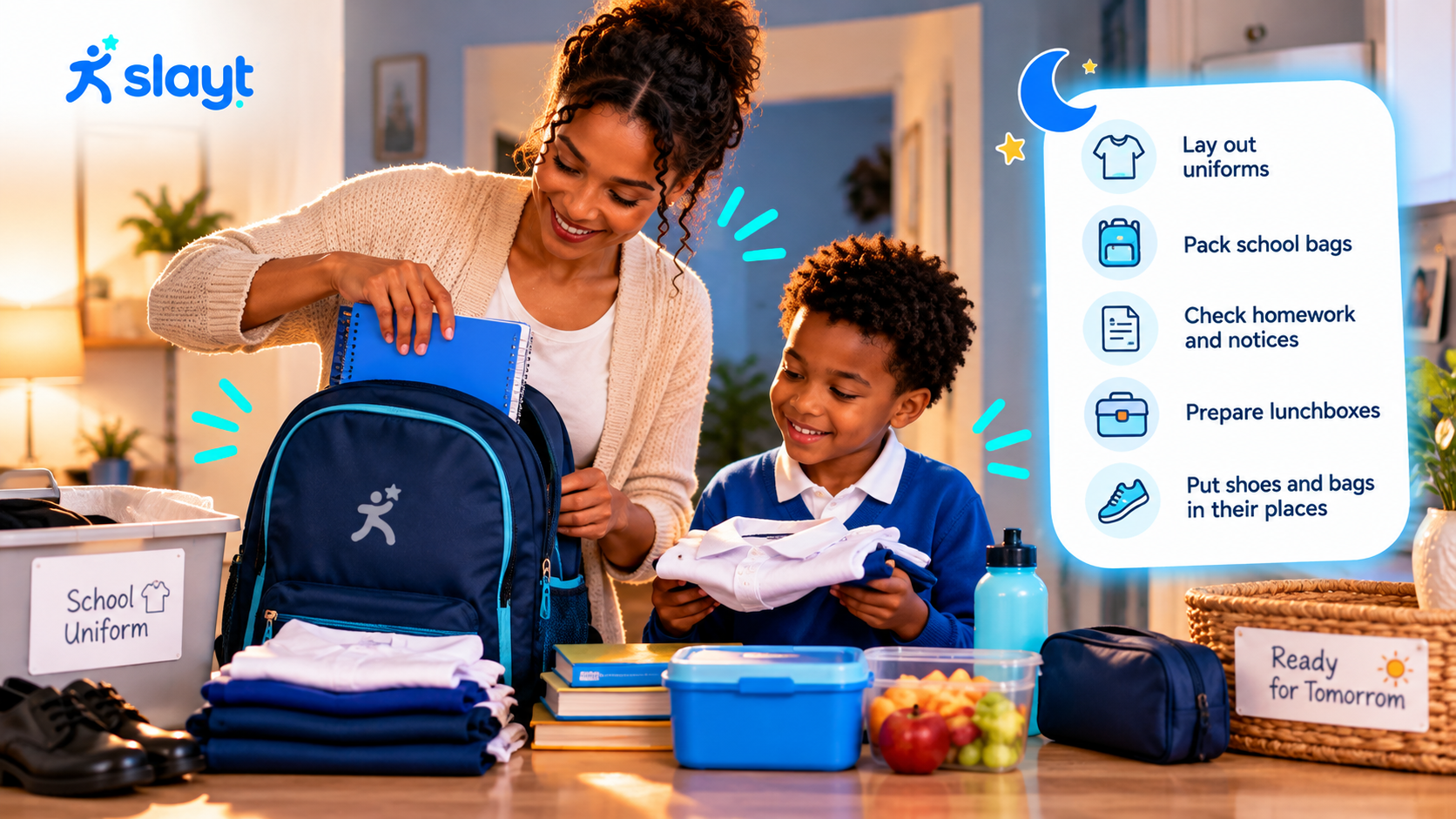
Create a simple school night routine that includes:
Choosing clothes or laying out the school uniform.
Packing the school bag.
Checking homework and school notices.
Preparing lunchboxes or lunch ingredients.
Putting shoes, coats, and bags in their designated places.
For children aged 5–7, do these tasks together and gradually allow them to take responsibility for individual steps.
Children aged 8–12 can increasingly use a checklist to prepare their belongings, with a parent checking anything important.
Teenagers can manage much of their preparation independently, including checking their timetable, charging devices, and preparing materials for the following day.
The aim is not perfection. It is to remove unnecessary decisions from the busiest part of the day.
Try this tonight: Choose just three things your family regularly scrambles to find in the morning. Give each one a permanent home and make checking them part of the evening routine.
2. Stop being the morning reminder system
Best suited to: Ages 5–18.
“Brush your teeth.”
“Have you brushed your teeth?”
“Why are you still sitting there?”
“Where is your school bag?”
When every step depends on a parent remembering to issue the next instruction, the morning becomes exhausting.
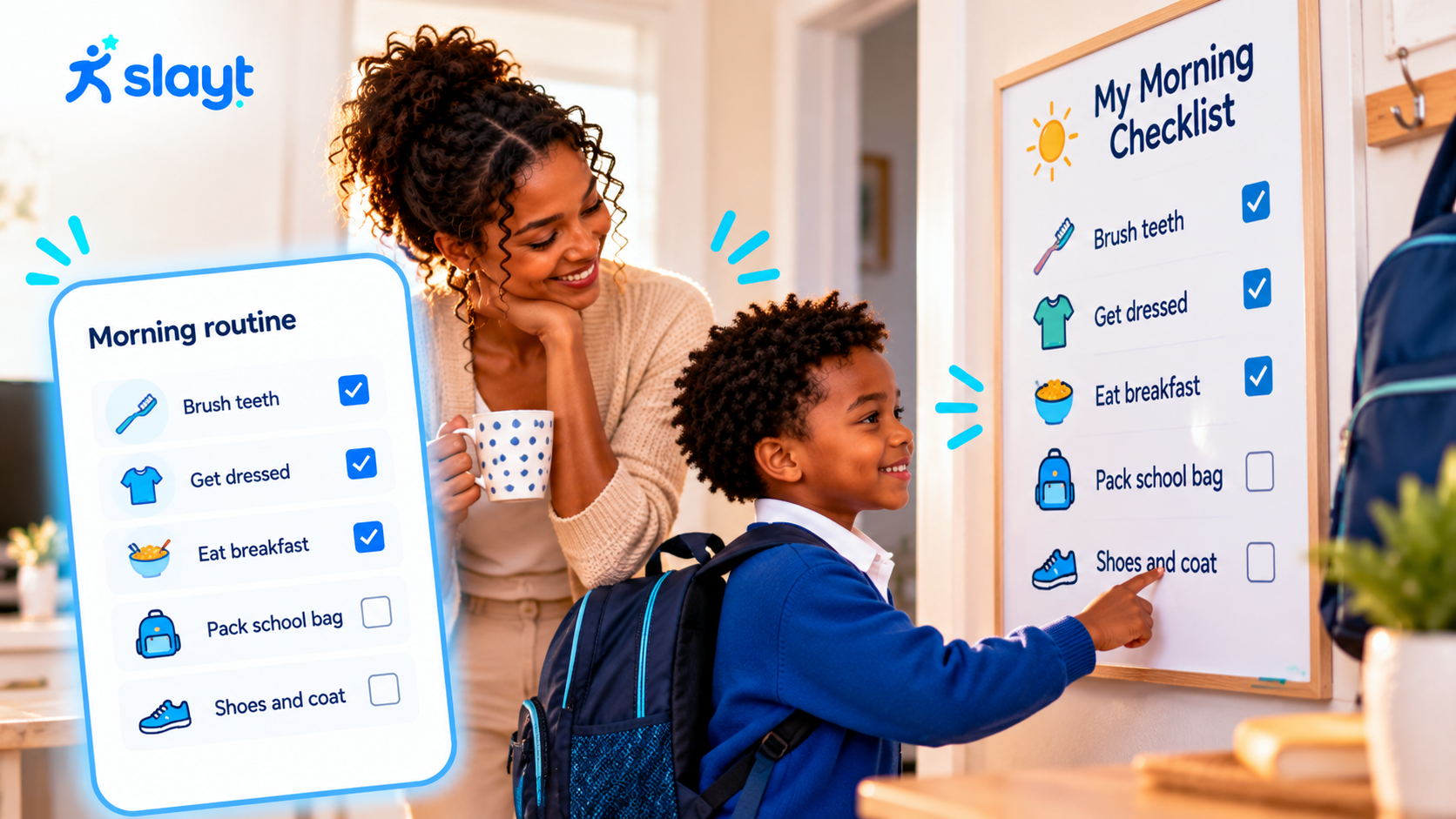
Instead of keeping the entire routine in your head, put it somewhere your child can see it.
For younger children, a visual morning checklist might show pictures of a toothbrush, clothes, breakfast, shoes, and a school bag.
Older children can use a written checklist or a digital routine that shows what needs to happen next.
For teenagers, a short list of essential morning responsibilities may work better than a detailed chart.
The key is to make the routine visible and predictable.
Rather than saying, “I have told you to get dressed three times,” try:
“What is the next thing on your morning checklist?”
You are still providing guidance, but you are also giving your child an opportunity to practise remembering and following through.
Over time, the goal is for the checklist to become their reference point rather than your voice.
3. Work backwards from the time you need to leave
Best suited to: Ages 8–18; parents can plan the schedule for younger children.
One common reason school mornings become chaotic is that families plan around the time school starts rather than the time everyone needs to leave home.
Suppose school begins at 8:30 a.m.
If the journey takes 20 minutes and you want a little extra time for traffic, parking, or walking to the school entrance, your actual departure time might be 8:00 a.m.
That is the time to build the morning routine around.
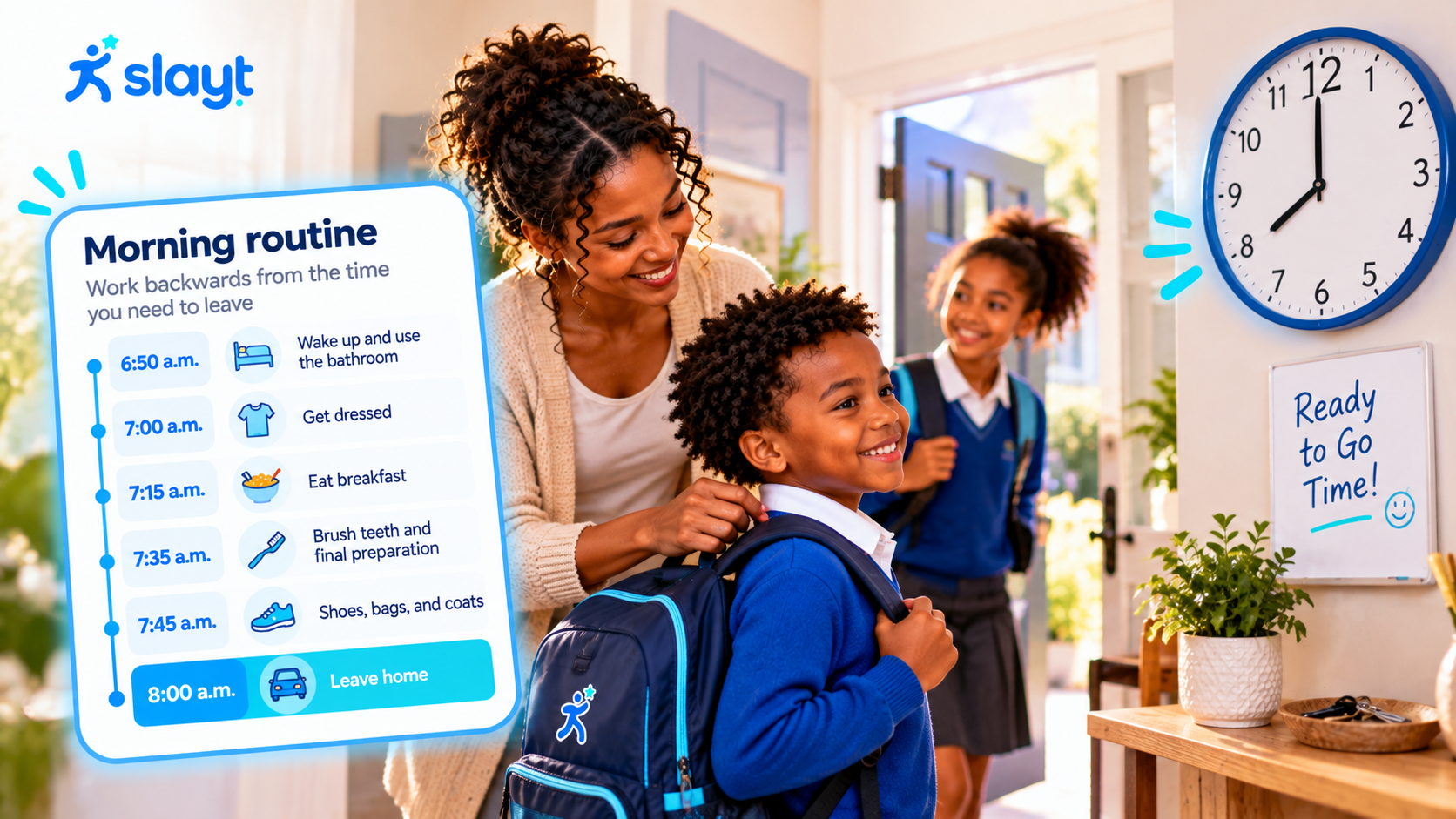
For example:
Time Activity
6:50 a.m. Wake up and use the bathroom
7:00 a.m. Get dressed
7:15 a.m. Eat breakfast
7:35 a.m. Brush teeth and complete final preparation
7:45 a.m. Shoes, bags, and coats
8:00 a.m. Leave home
This is only an example. Your family's schedule will depend on children's ages, travel time, school arrangements, and how much support each child needs.
The important part is to establish a realistic departure time and build in a buffer.
You can even give the final preparation period a name, such as “Ready-to-Go Time.”
That way, the goal is not to be running through the house at 7:59 a.m. The goal is to have everyone ready before the departure deadline.
4. Give every child a morning responsibility they own

Best suited to: Ages 5–18, with age-appropriate expectations.
Children are more likely to practise independence when they have clear responsibilities rather than an endless stream of instructions.
Start small.
A five-year-old might be responsible for putting their shoes by the door.
An eight-year-old might check that their school bag contains the items on their checklist.
A twelve-year-old might prepare their uniform and organize their school materials.
A sixteen-year-old might manage their own departure preparation, school timetable, and equipment for extracurricular activities.
These are examples, not rigid developmental rules. Adjust them to each child's abilities, maturity, needs, and circumstances.
The important distinction is between helping your child learn a responsibility and expecting them to master it immediately.
At first, you may need to demonstrate the task, complete it together, and check the result.
Gradually, you can step back.
Instead of taking over whenever something is forgotten, ask:
“What could help you remember that tomorrow?”
It is a small question, but it encourages your child to participate in finding a solution.
5. Make the routine realistic, not impressive
Best suited to: All ages.
It is tempting to design the perfect morning schedule.
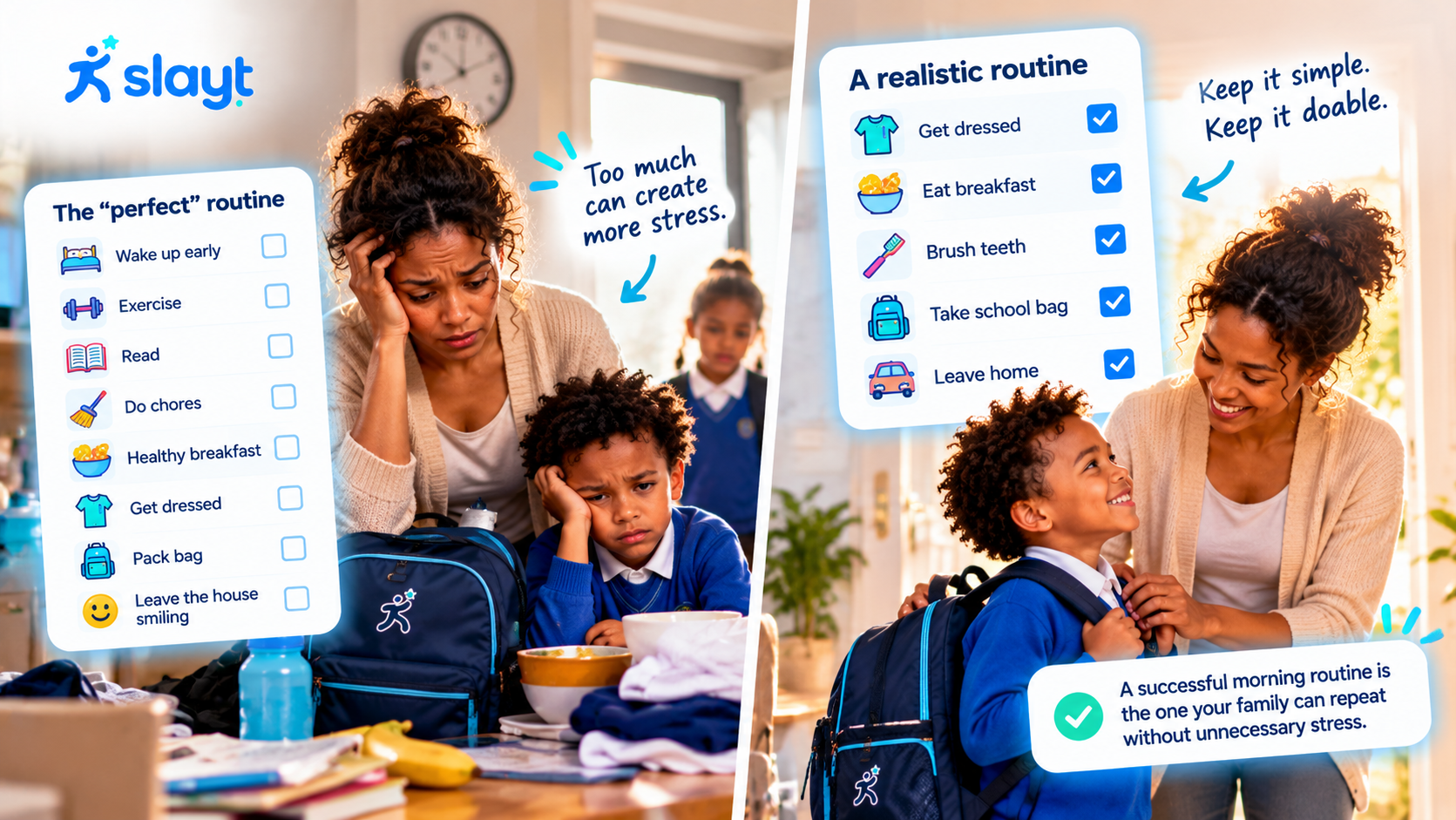
Wake up early. Make the bed. Exercise. Read. Eat a healthy breakfast. Complete a list of chores. Leave the house smiling.
But a routine is only useful if your family can actually follow it.
For a child who already struggles to get dressed and eat breakfast before school, adding ten new tasks may create more frustration.
Start with the essentials.
What absolutely needs to happen before leaving home?
What can be done the night before?
What can wait until after school?
For younger children, keep the checklist short and visual. For older children, involve them in deciding the order of tasks.
You may discover that one child prefers getting dressed before breakfast, while another finds it easier to eat first.
Where the order does not matter, allowing some flexibility can make the routine feel more manageable.
A successful morning routine is not the one with the most activities.
It is the one your family can repeat without unnecessary stress.
6. Notice progress, not just what went wrong
Best suited to: Ages 5–18.
Imagine your child remembers their school bag without being reminded.
It might seem like a small achievement. After all, they are supposed to take their bag to school.
But if remembering independently is something they have been practising, it deserves recognition.
You could say:
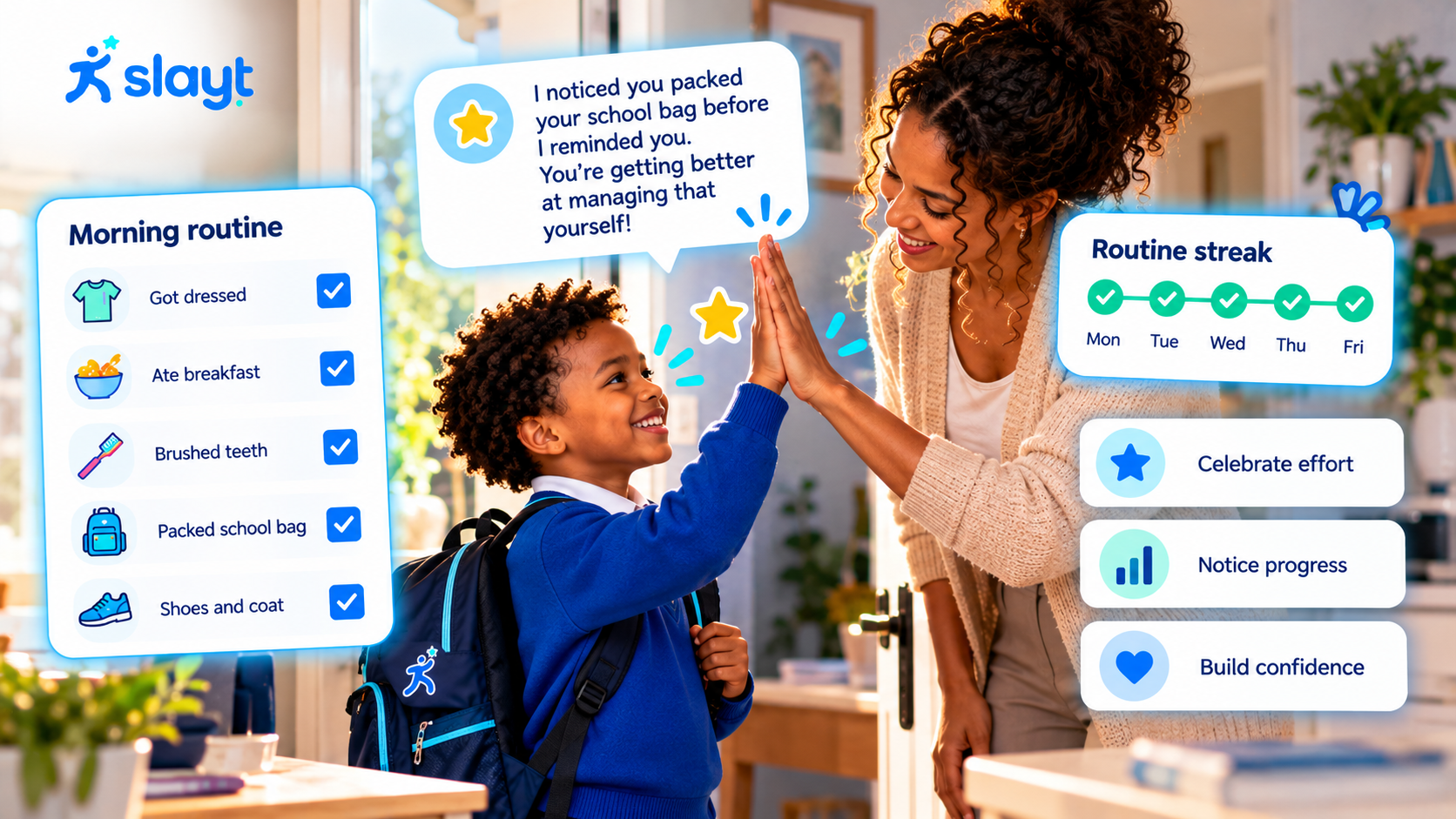
“I noticed you packed your school bag before I reminded you. You are getting better at managing that yourself.”
That is more specific than a general “Good job.”
You are identifying the behaviour you want to encourage.
For younger children, a sticker, star, or simple celebration might make progress visible.
Older children may appreciate seeing a streak of completed routines, choosing a family activity, or simply having their growing independence acknowledged.
Teenagers may prefer greater autonomy and fewer reminders rather than a visible reward chart.
Not every responsibility needs a prize.
Sometimes, recognizing effort and showing children that you trust them with increasing responsibility can be meaningful encouragement.
7. When the morning goes wrong, improve the system together
Best suited to: Ages 5–18, using age-appropriate conversations.
Even the best school morning routine will not work perfectly every day.
Someone will oversleep.
A shoe will disappear.
A child will move more slowly than expected.
A last-minute school announcement will change the plan.
When this happens, try not to turn the entire morning into a judgment about your child's character.
Later, when everyone has time to talk, ask:
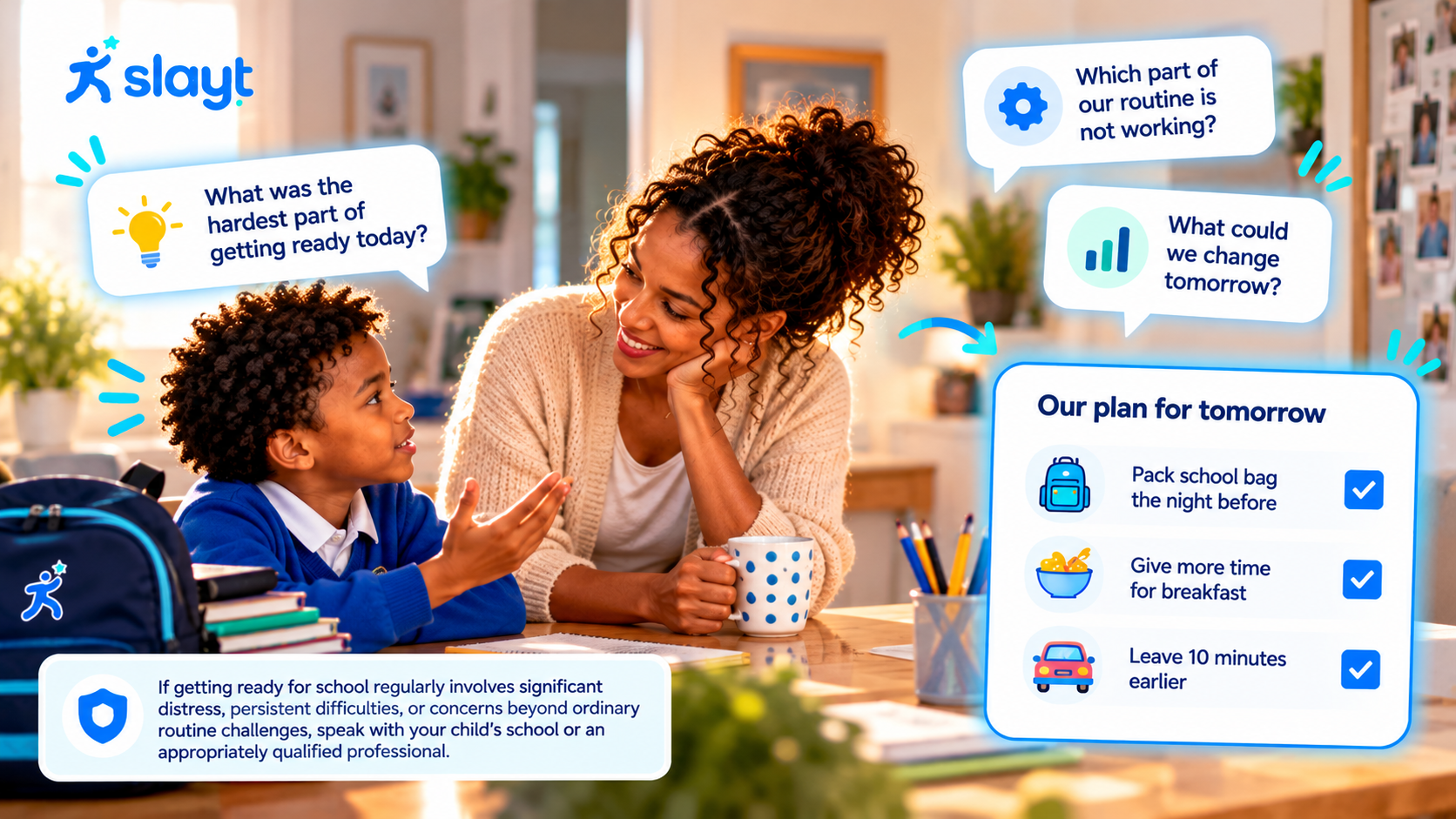
“What was the hardest part of getting ready today?”
“Which part of our routine is not working?”
“What could we change tomorrow?”
Perhaps the checklist has too many steps.
Perhaps your child needs more time to eat breakfast.
Perhaps the school bag needs to be packed before dinner rather than at bedtime.
Or perhaps the departure time needs adjusting.
A routine should help your family, not become another source of arguments.
If getting ready for school regularly involves significant distress, persistent difficulties, or concerns beyond ordinary routine challenges, speak with your child's school or an appropriately qualified professional. A checklist is not a substitute for individualized support.
A simple school morning checklist to try tomorrow
You do not need to change everything at once.
Start with this:
The night before
Check tomorrow's school timetable.
Prepare clothes or uniform.
Pack school bag and necessary materials.
Prepare lunch items.
Put shoes and bags in their usual places.
In the morning
Wake up and get dressed.
Eat breakfast.
Complete personal hygiene.
Check the school bag.
Put on shoes and collect belongings.
Be ready before departure time.
For younger children, use pictures and guide them through the steps. For older children and teenagers, invite them to adapt the list and take increasing ownership.
Try the routine for a school week, then discuss what worked and what needs changing.
You might be surprised by how much easier mornings feel when everyone knows what comes next.
From “Have you done it?” to “I've done it.”
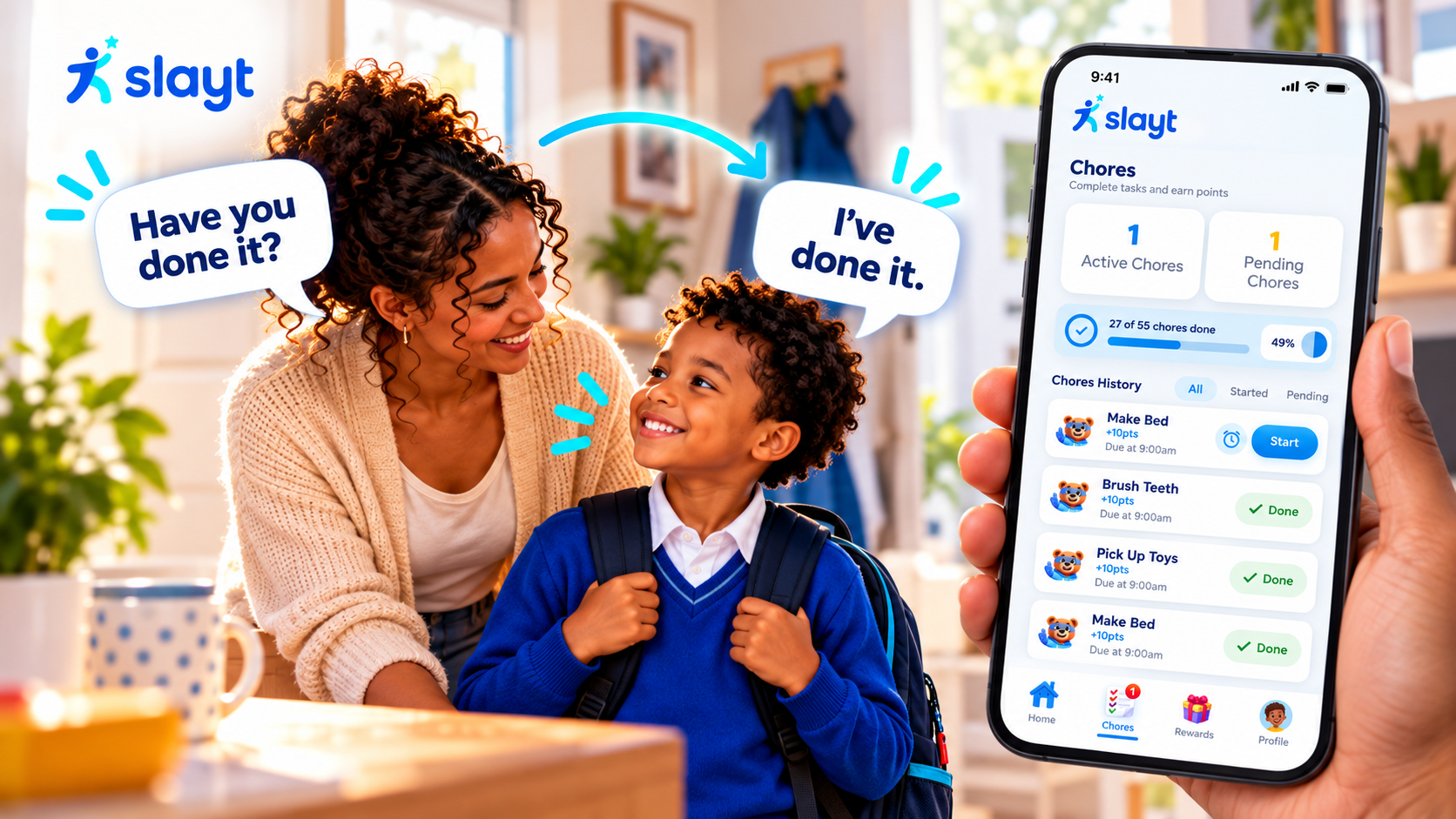
The real goal of a school morning routine is not simply getting out of the house on time.
It is helping children gradually learn to organize themselves, remember their responsibilities, and take ownership of the things they can manage.
That takes patience, practice, and encouragement.
And parents should not have to carry every reminder in their heads.
Slayt Parenting is designed to help families bring everyday responsibilities, routines, reminders, and progress into one place, supporting children as they practise becoming more independent.
Because the best kind of school morning is not necessarily the one where everything goes perfectly.
It is the one where everyone is learning to do their part.
To read more articles like this, subscribe to our mailing list here: https://wkf.ms/4zLcWhz
Explore Slayt Parenting at theslayt.com.